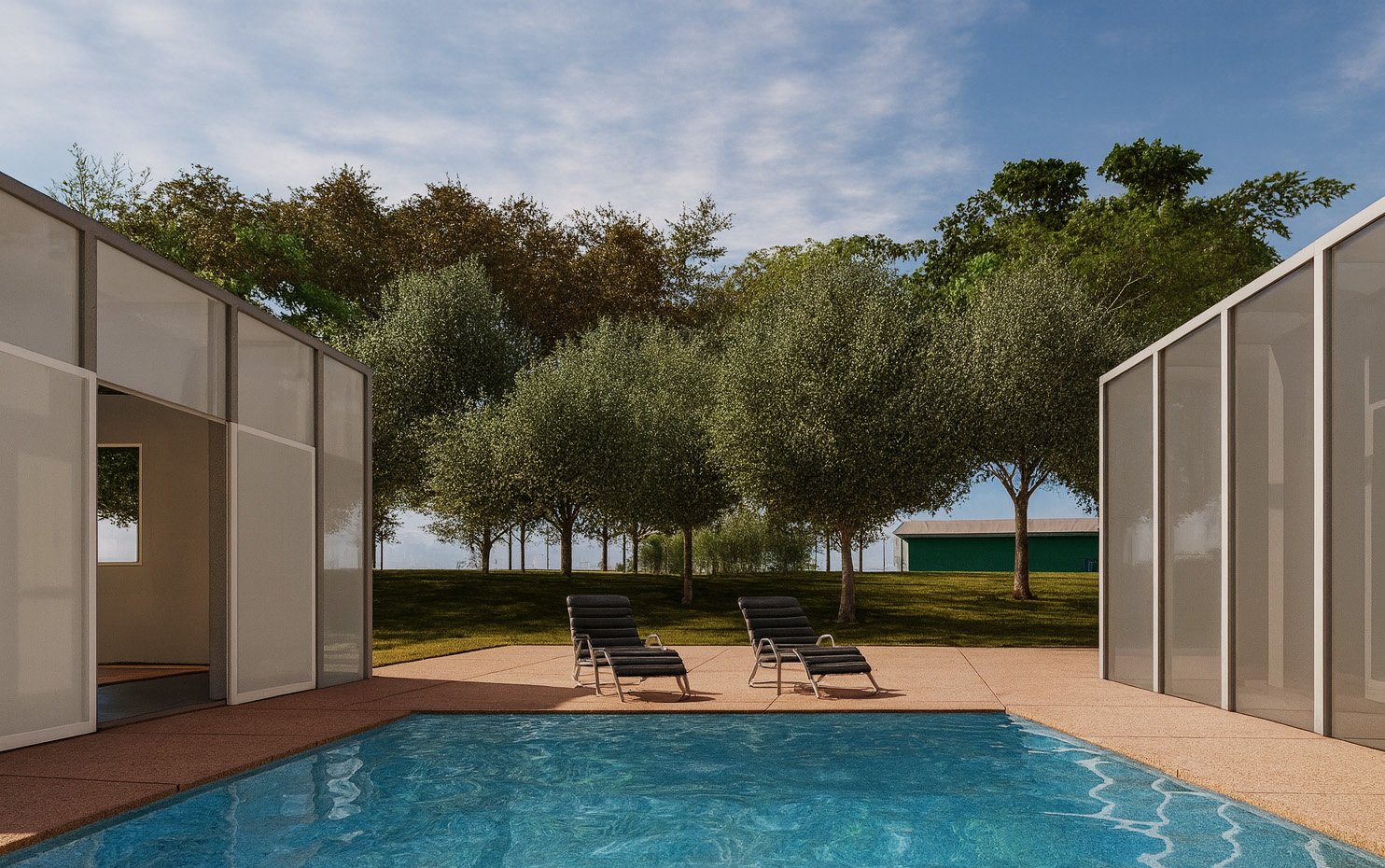
the greenhouse
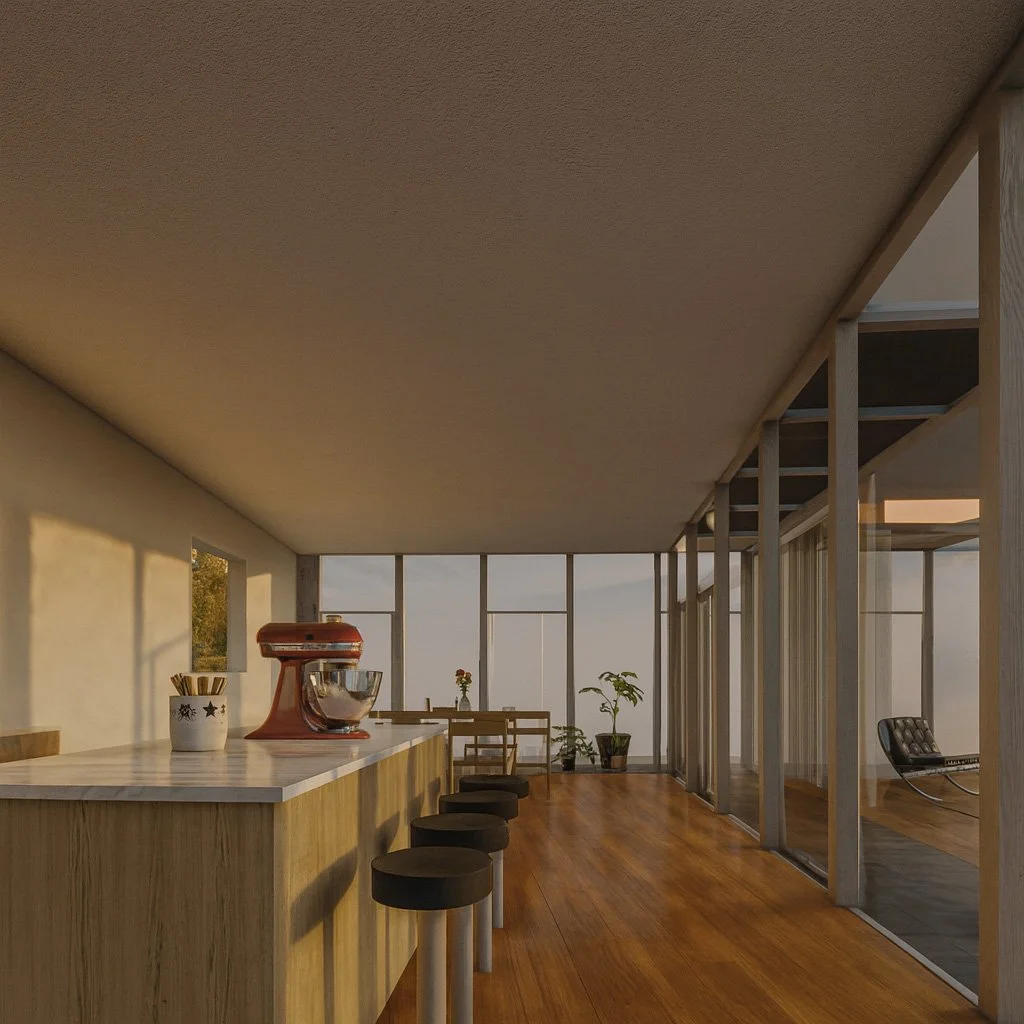
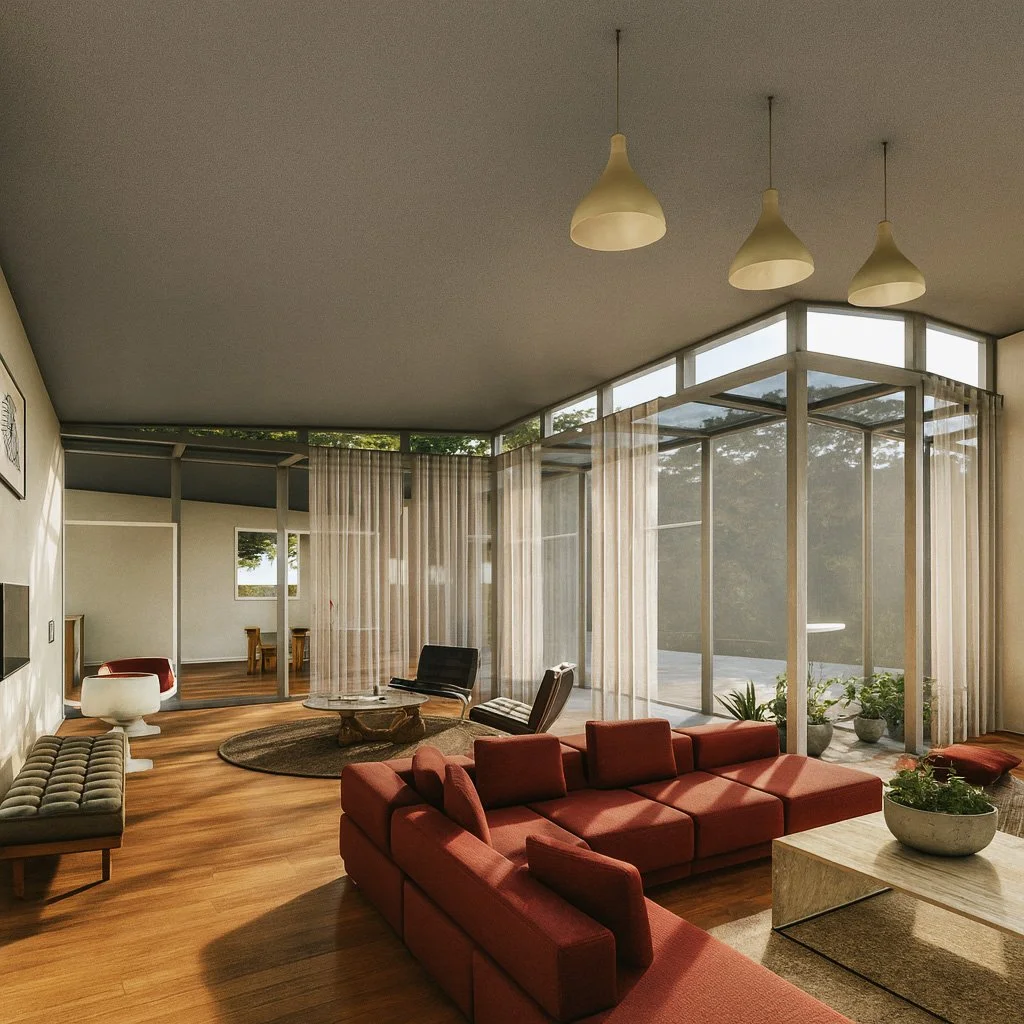
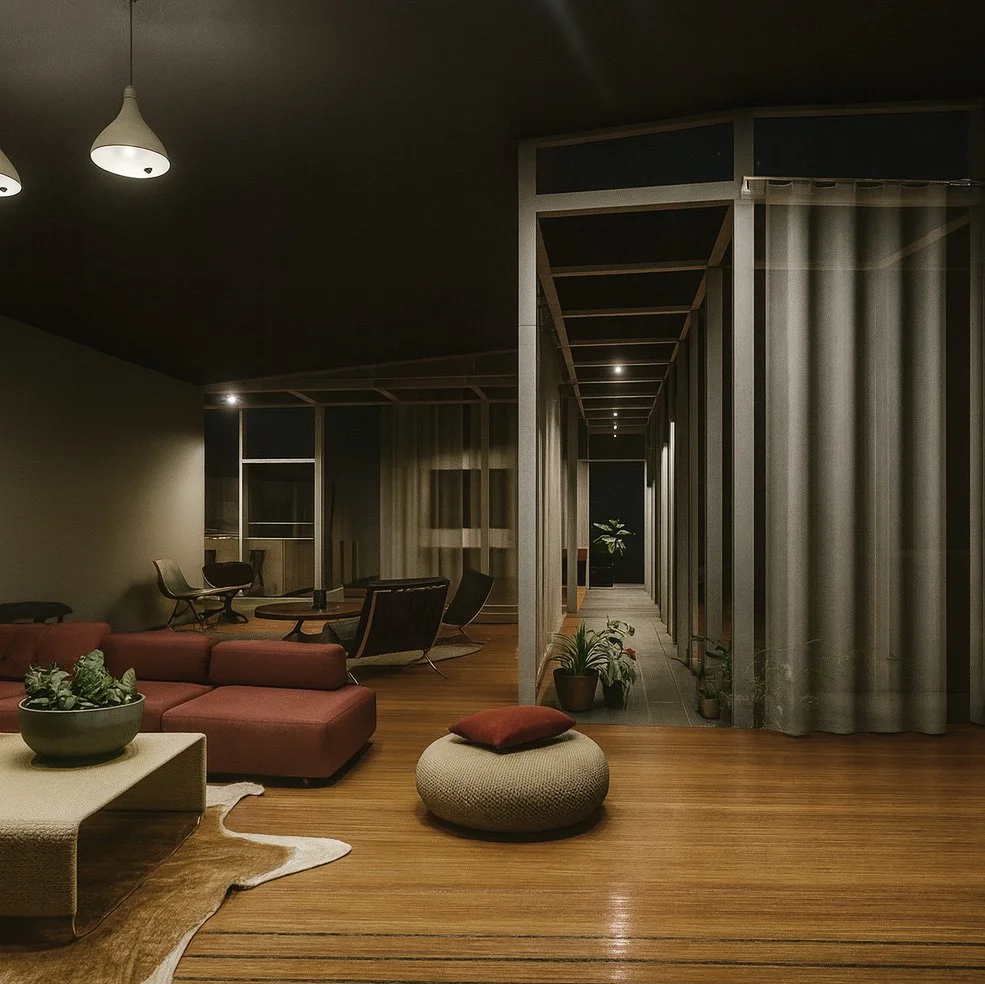
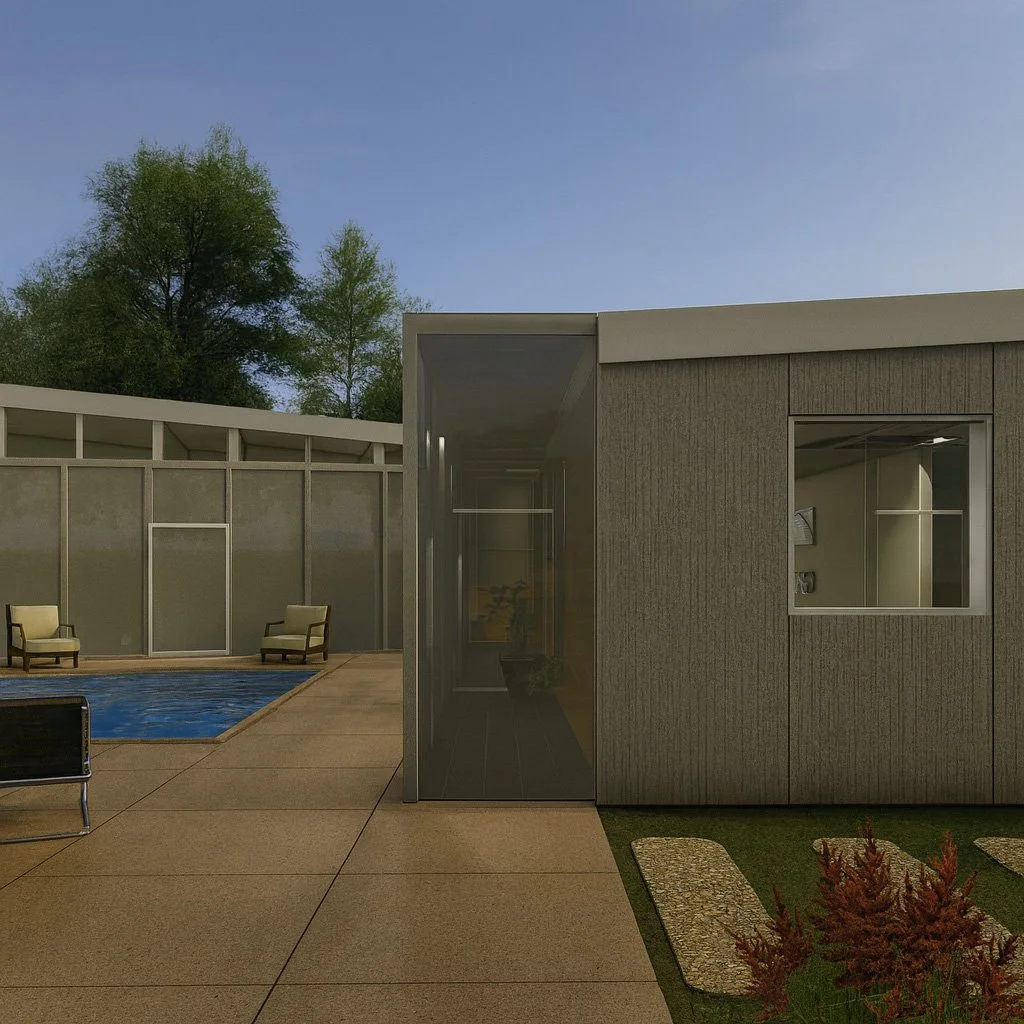
the Greenhouse is a project meant to be a modern rendition of the mid-century Case Study Program, practicing design integrity of the original structures, whilst introducing resiliency and adaptability for a future-oriented home. prior to designing my own Case Study House. I extensively both studied the original program amongst studio mates, and participated in model-making for the Case Study: Adapt revival program for fire rebuild in preparation for the final design.
fall 2025
CASE STUDY HOUSE PROGRAM RESEARCH
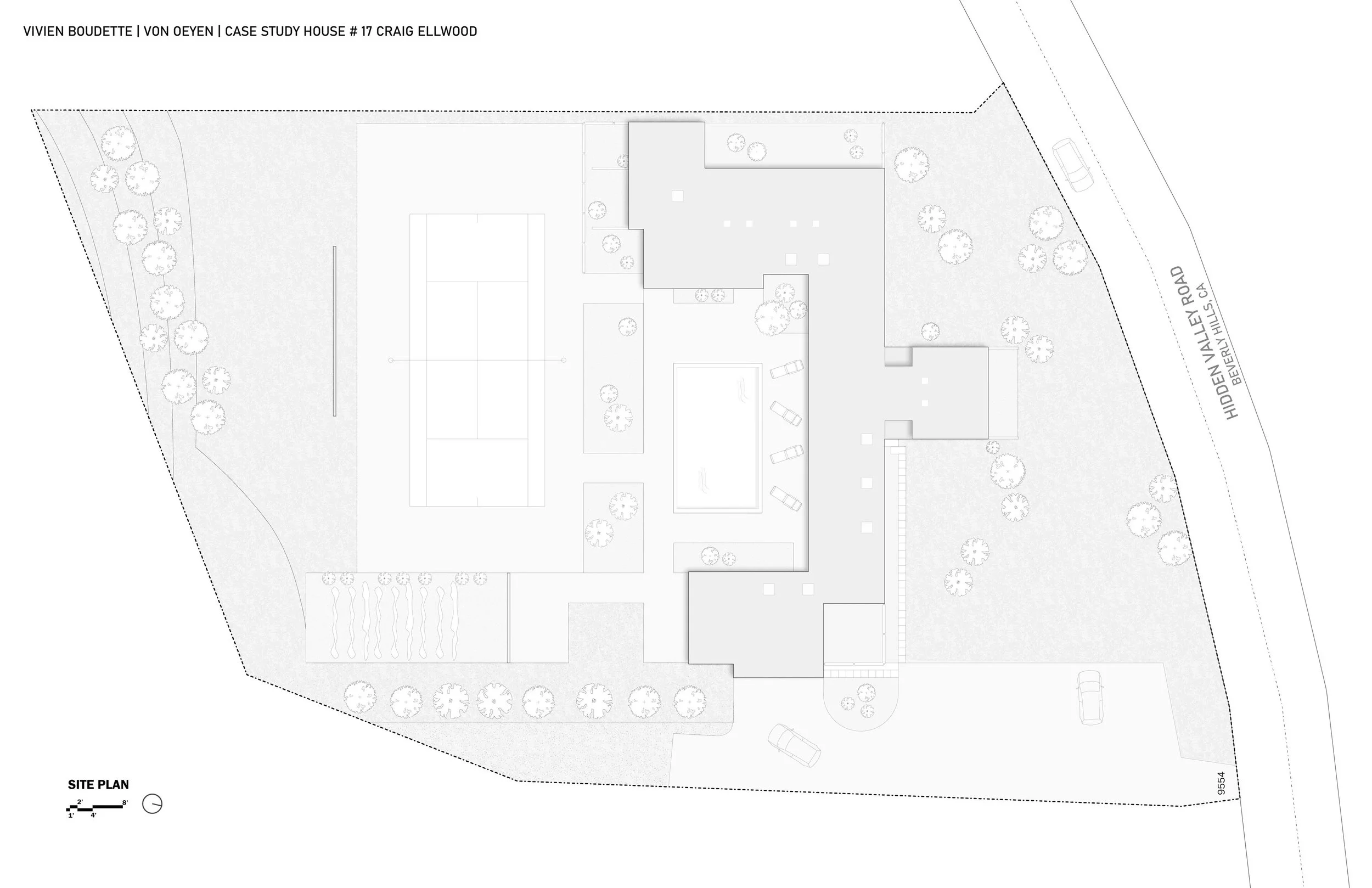
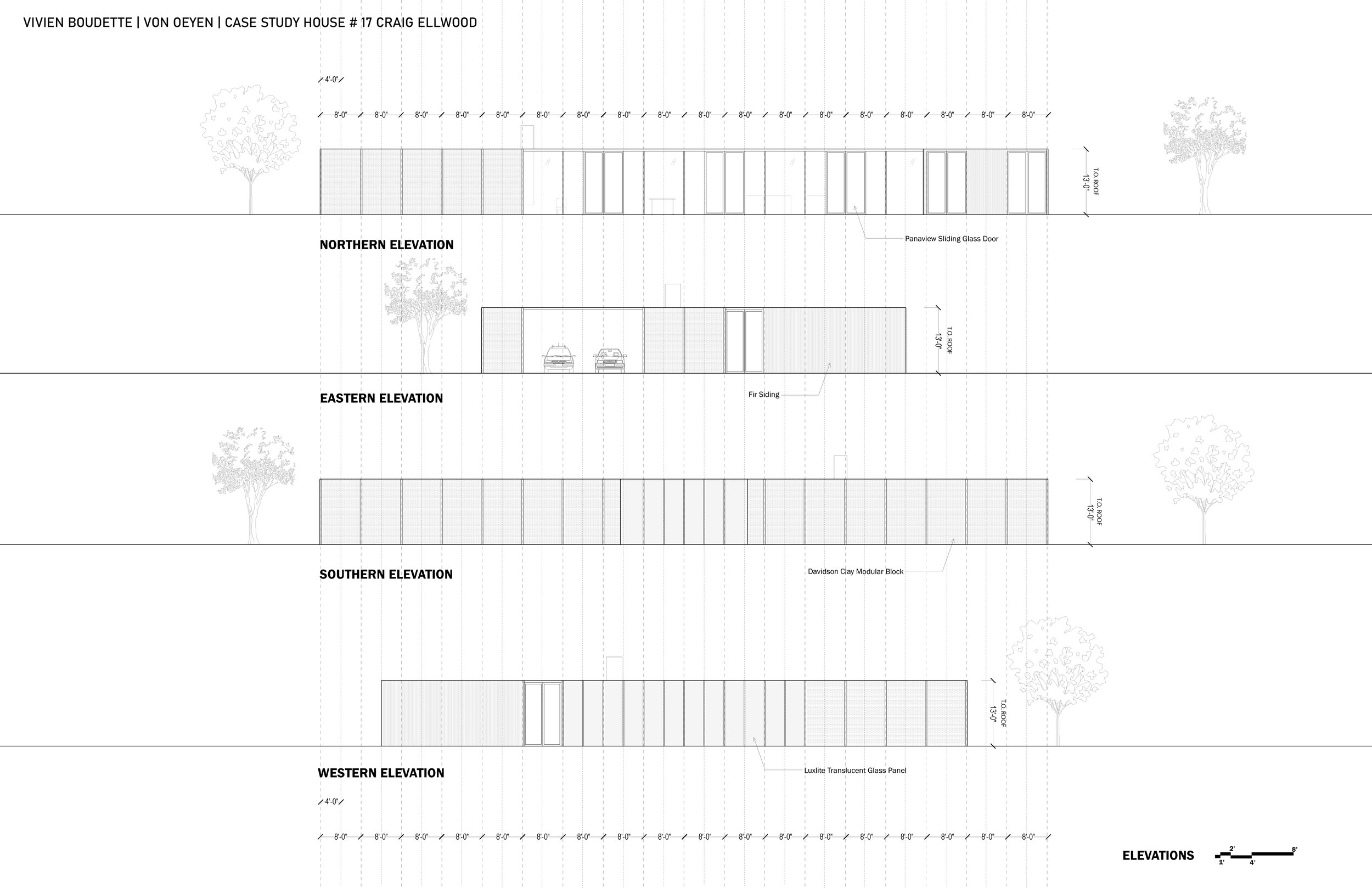
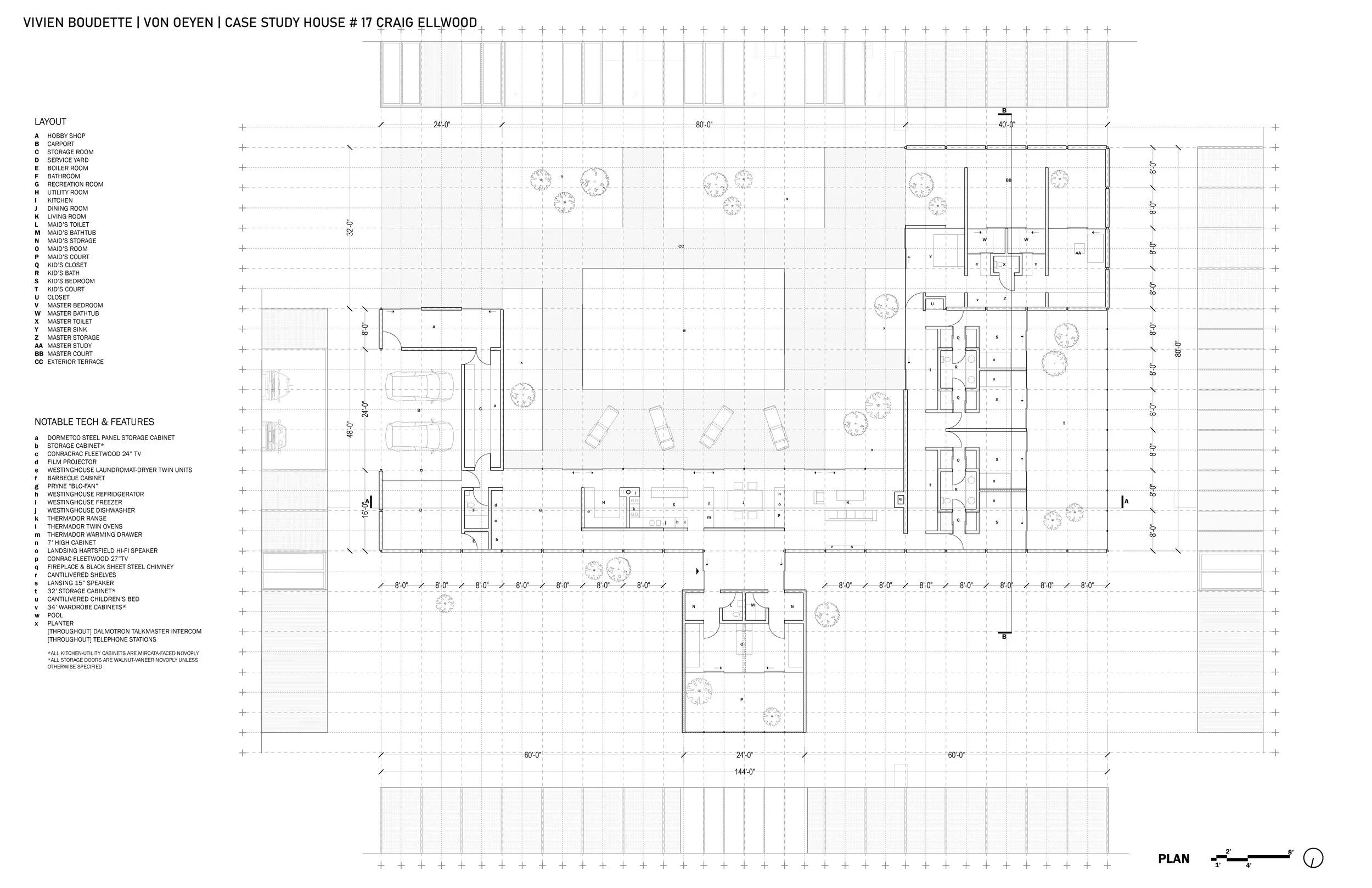
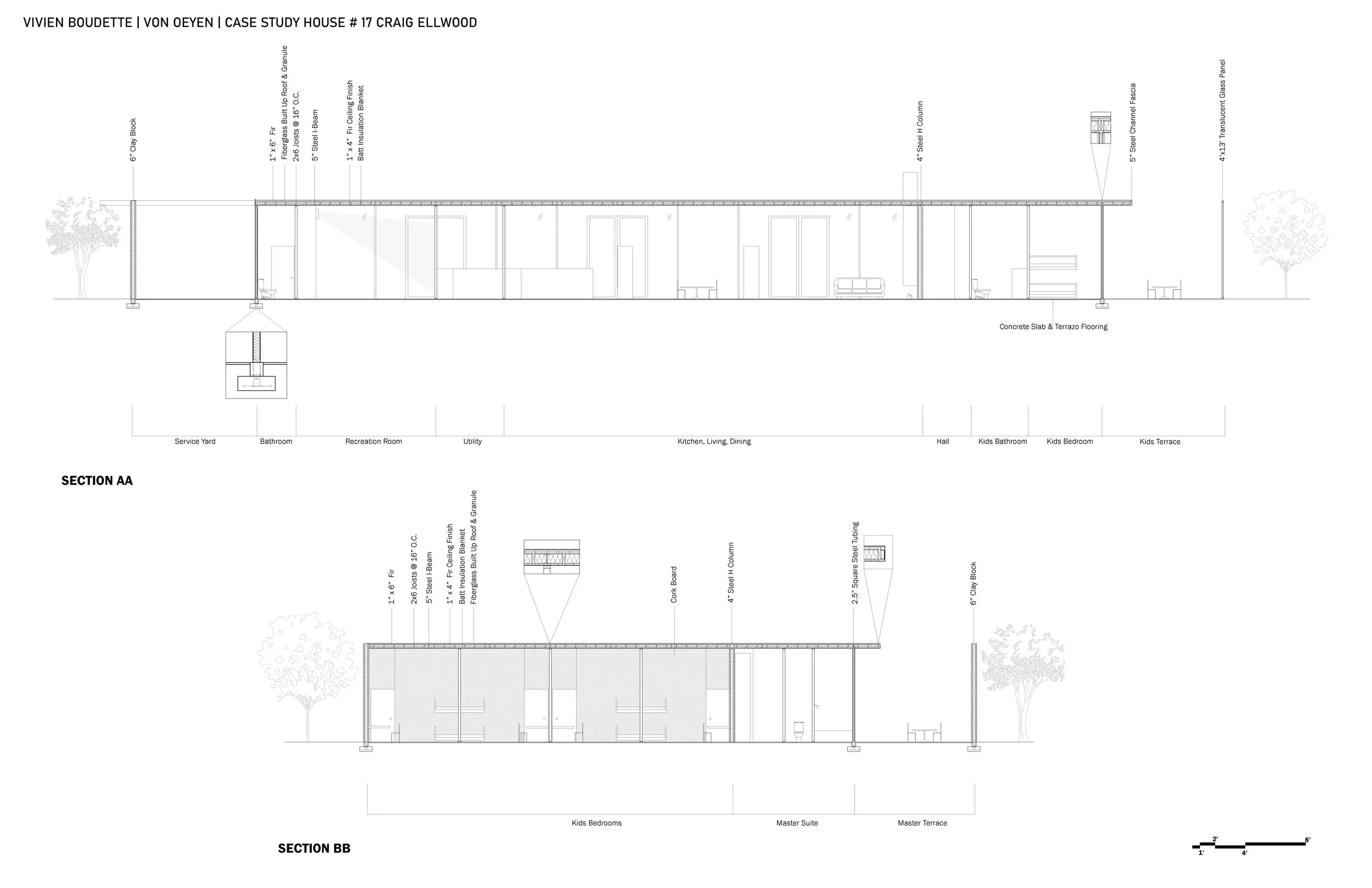
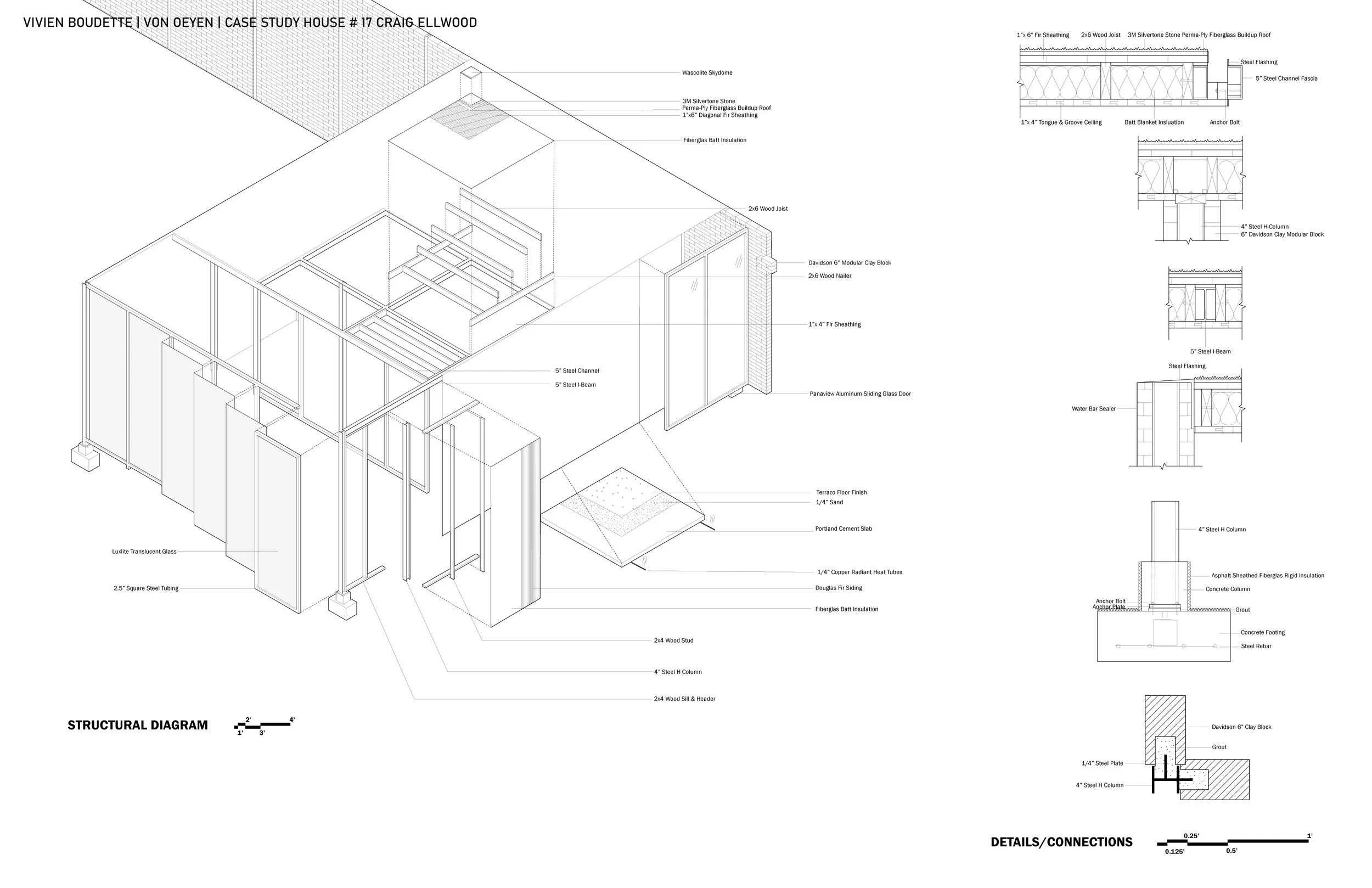
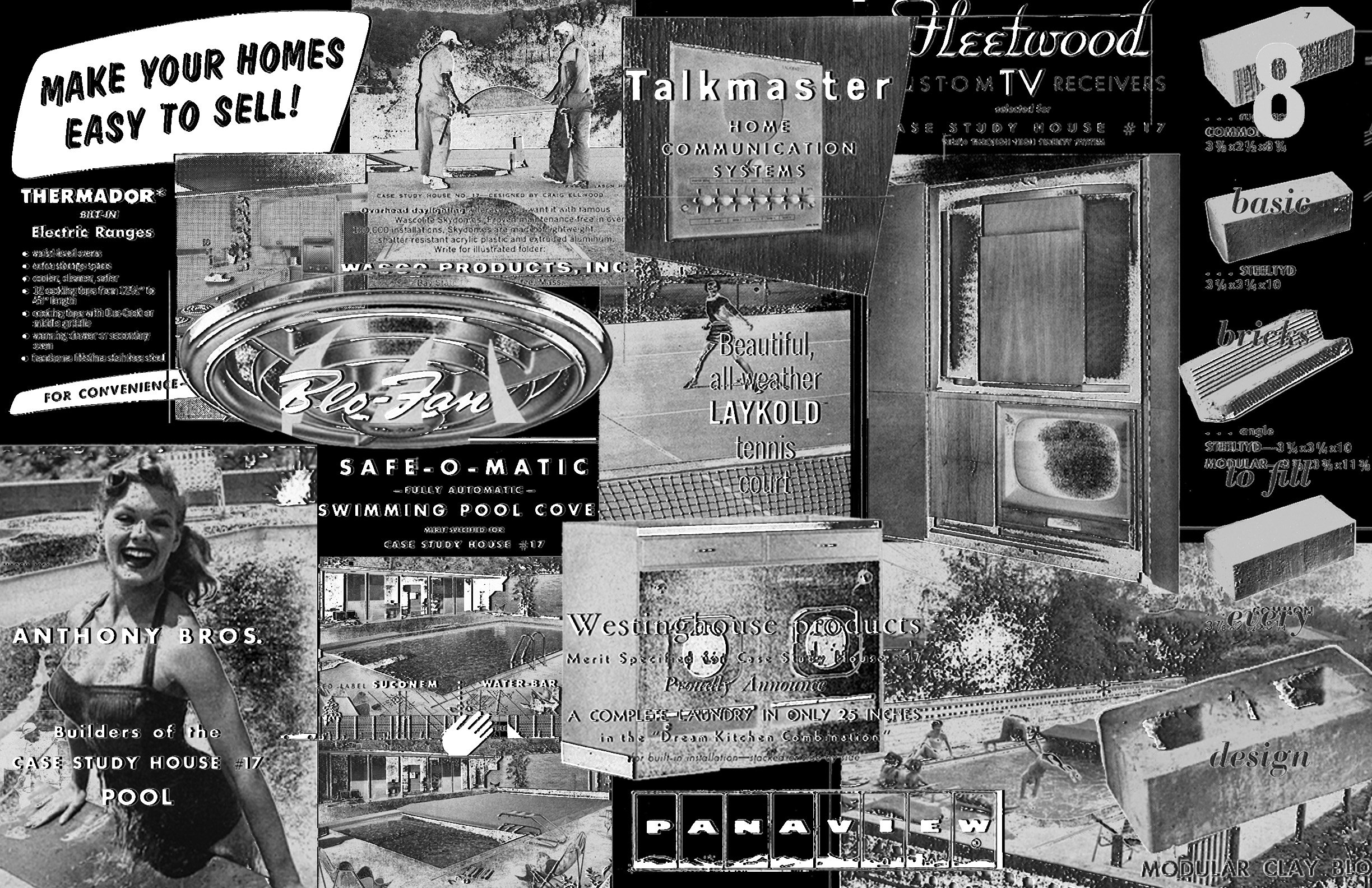
my research of CSH focused deeply in on CSH 17b by Craig Ellwood, or informally known as the Hoffman House. understanding form and design intention was critical to understand the conception of the Hoffman House as a part of the case study program and its fundamentals.
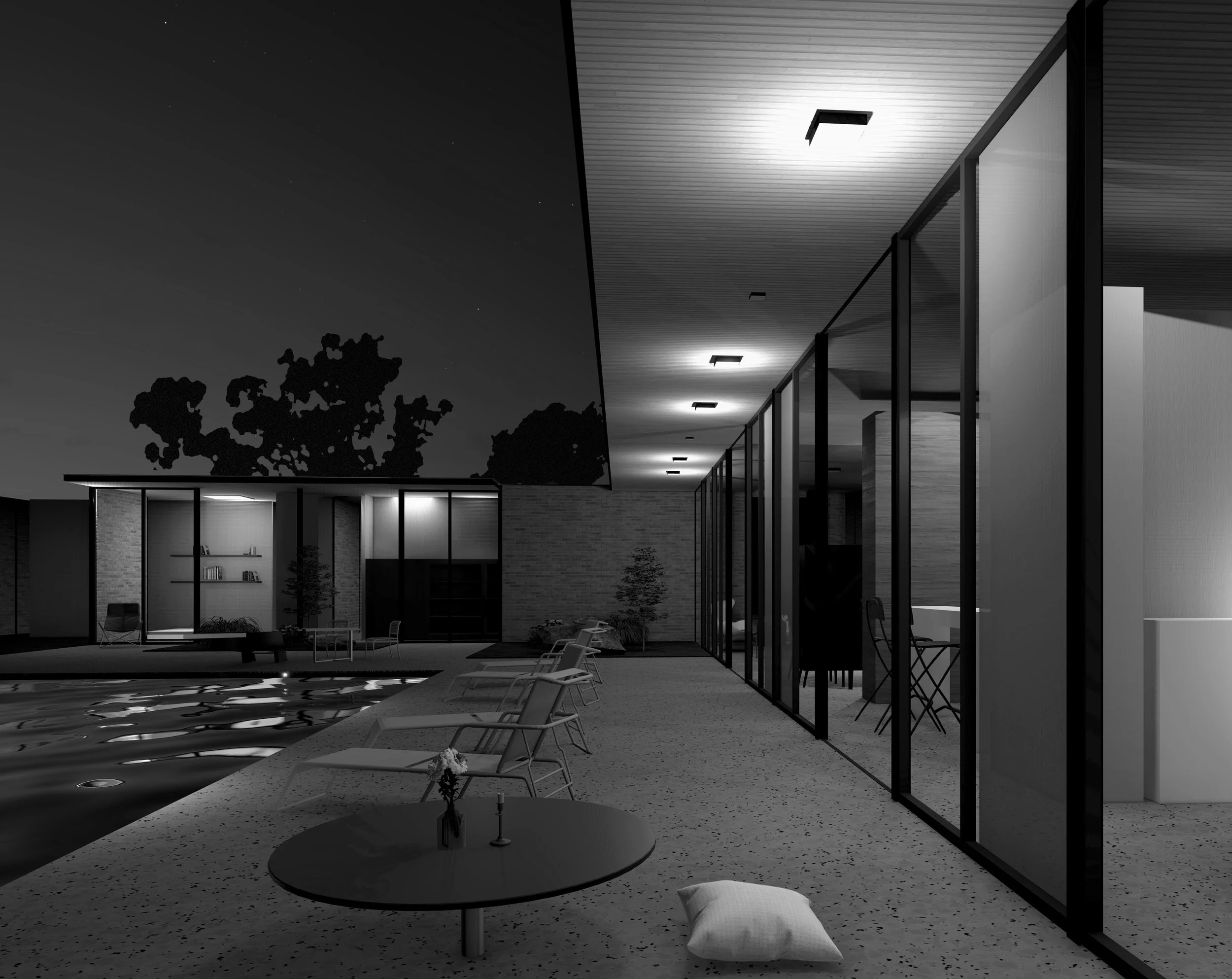
the home was designed to cater to a family of 6, with a maid, the home was quite large. it was driven by its unfolding symmetries, and its use of a strict grid/sub-grid system. Ellwood situated the house around a main, central pool terrace. this was crucial in aspects of division of space, circulative routes, lighting and visibility, outdoor programming, and scenic views of the Beverly Hills.
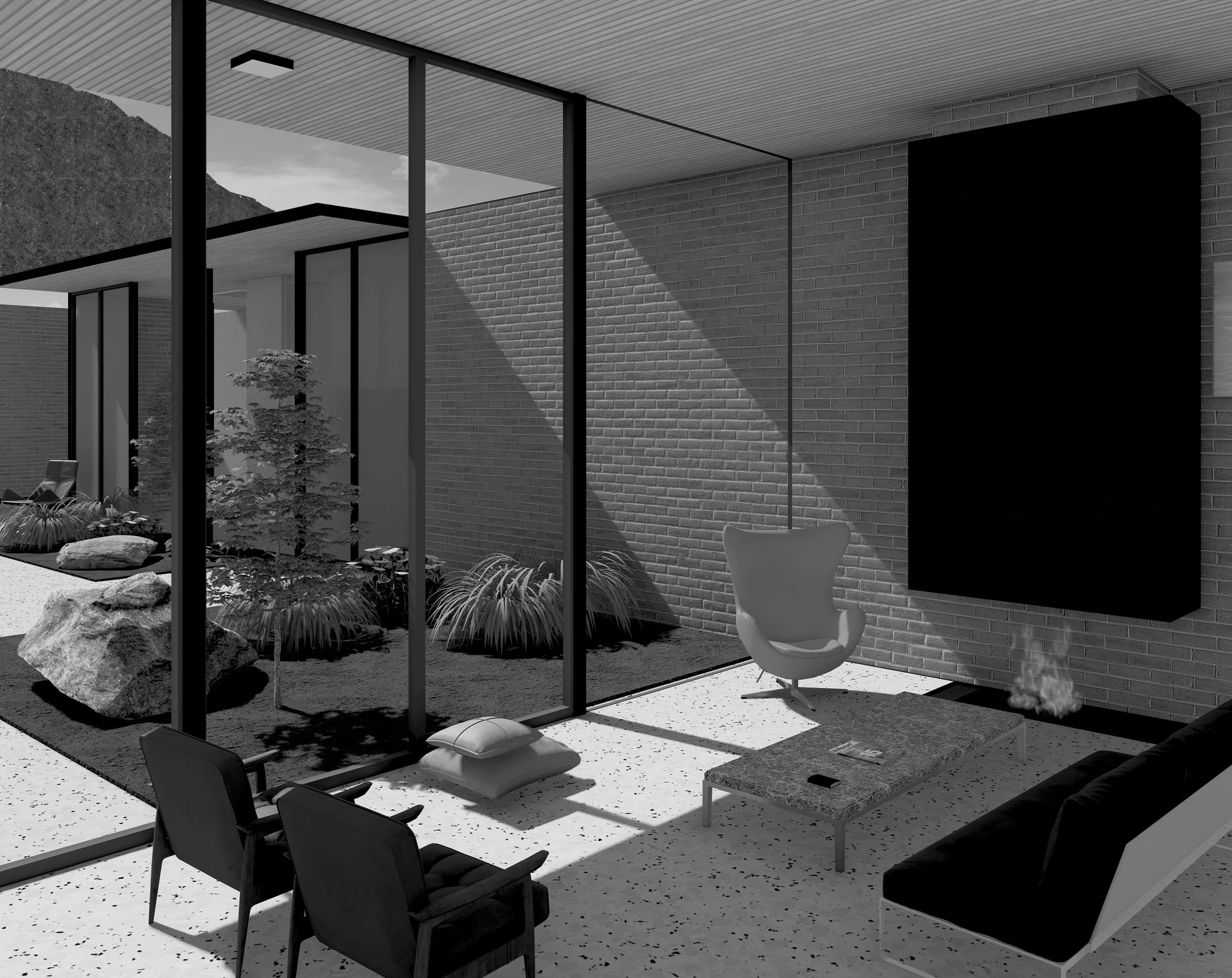
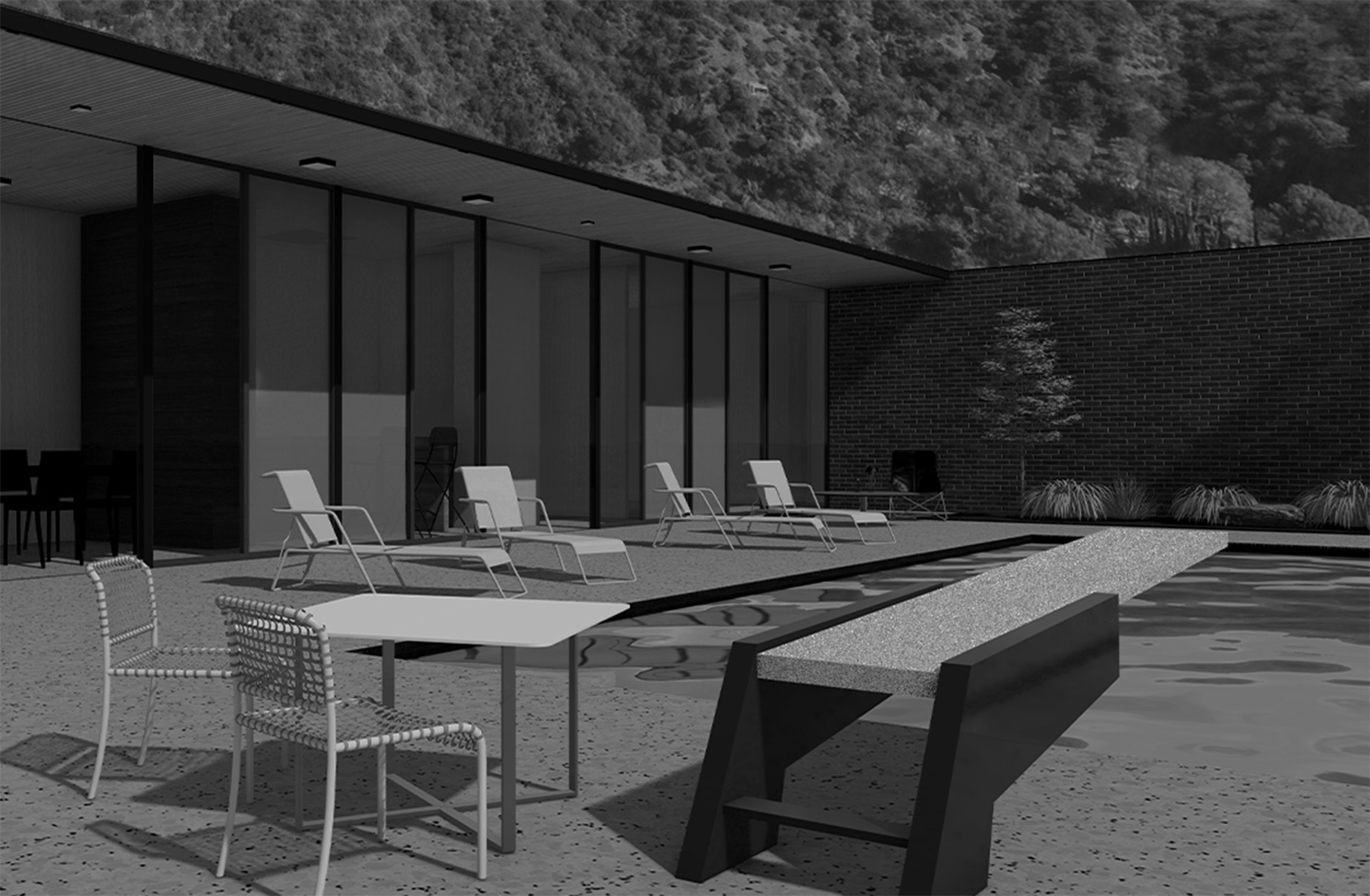
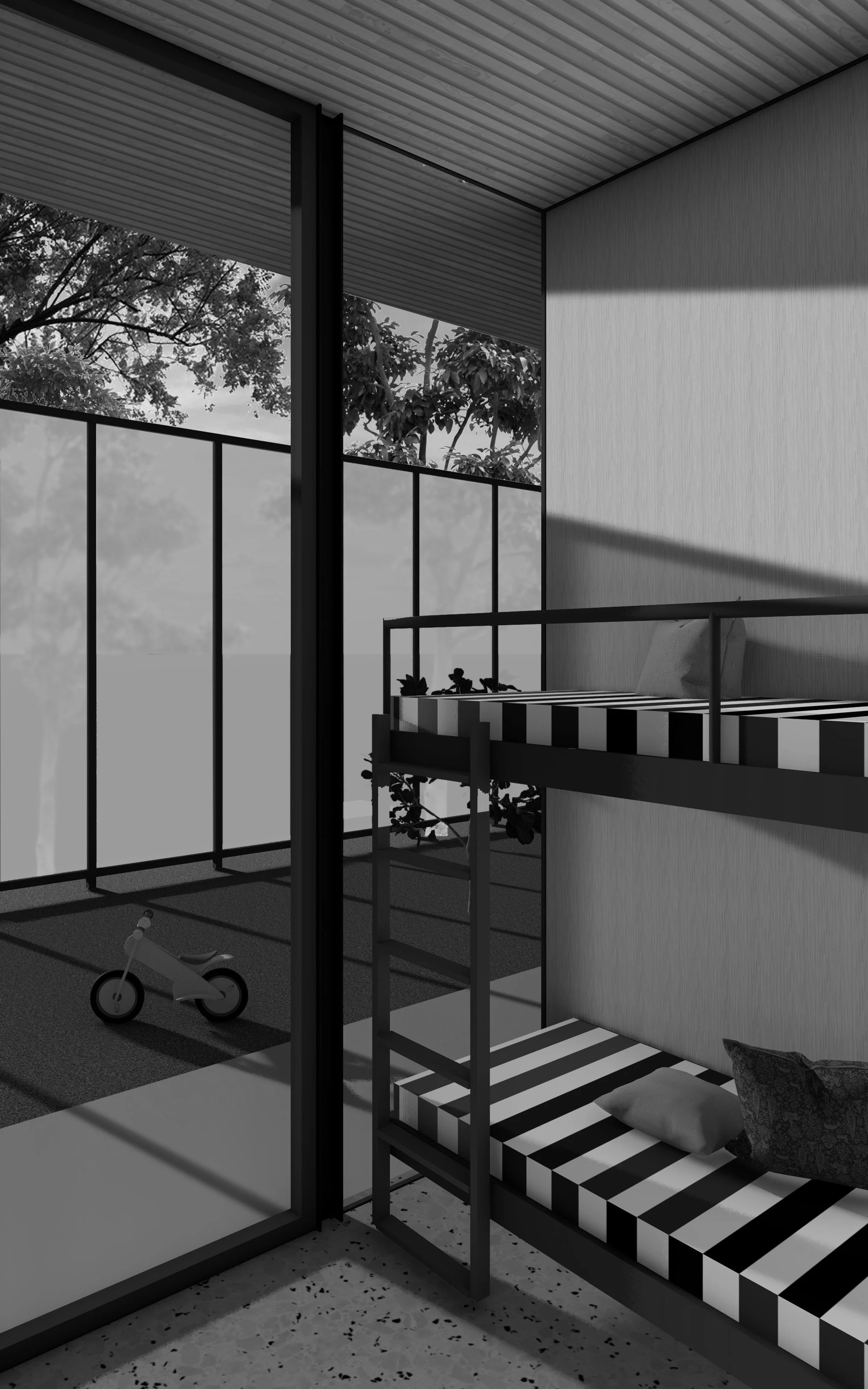
PERSONAL DESIGN
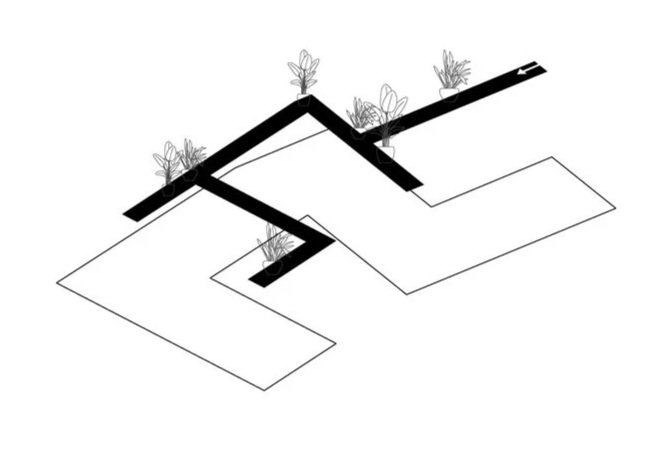
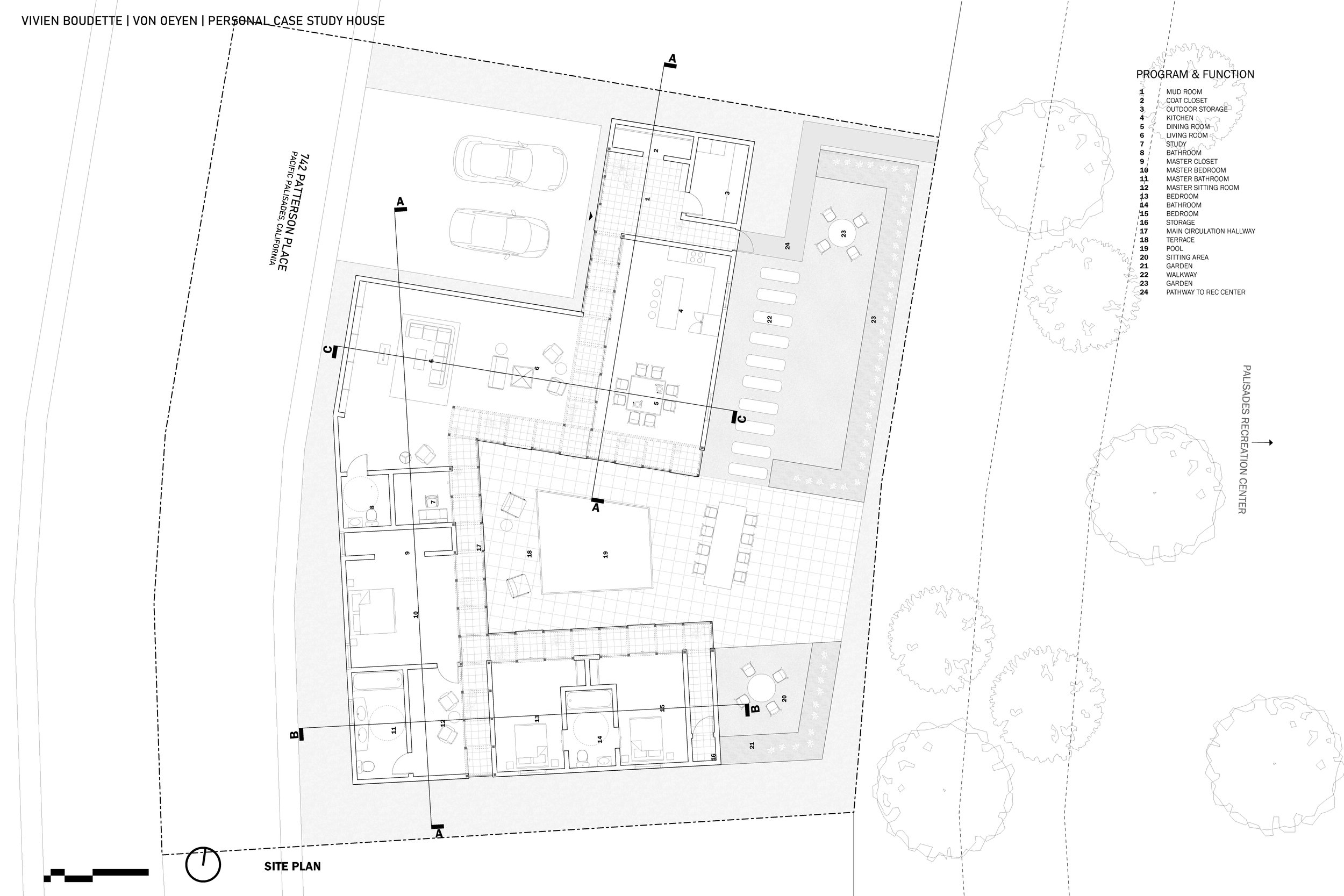
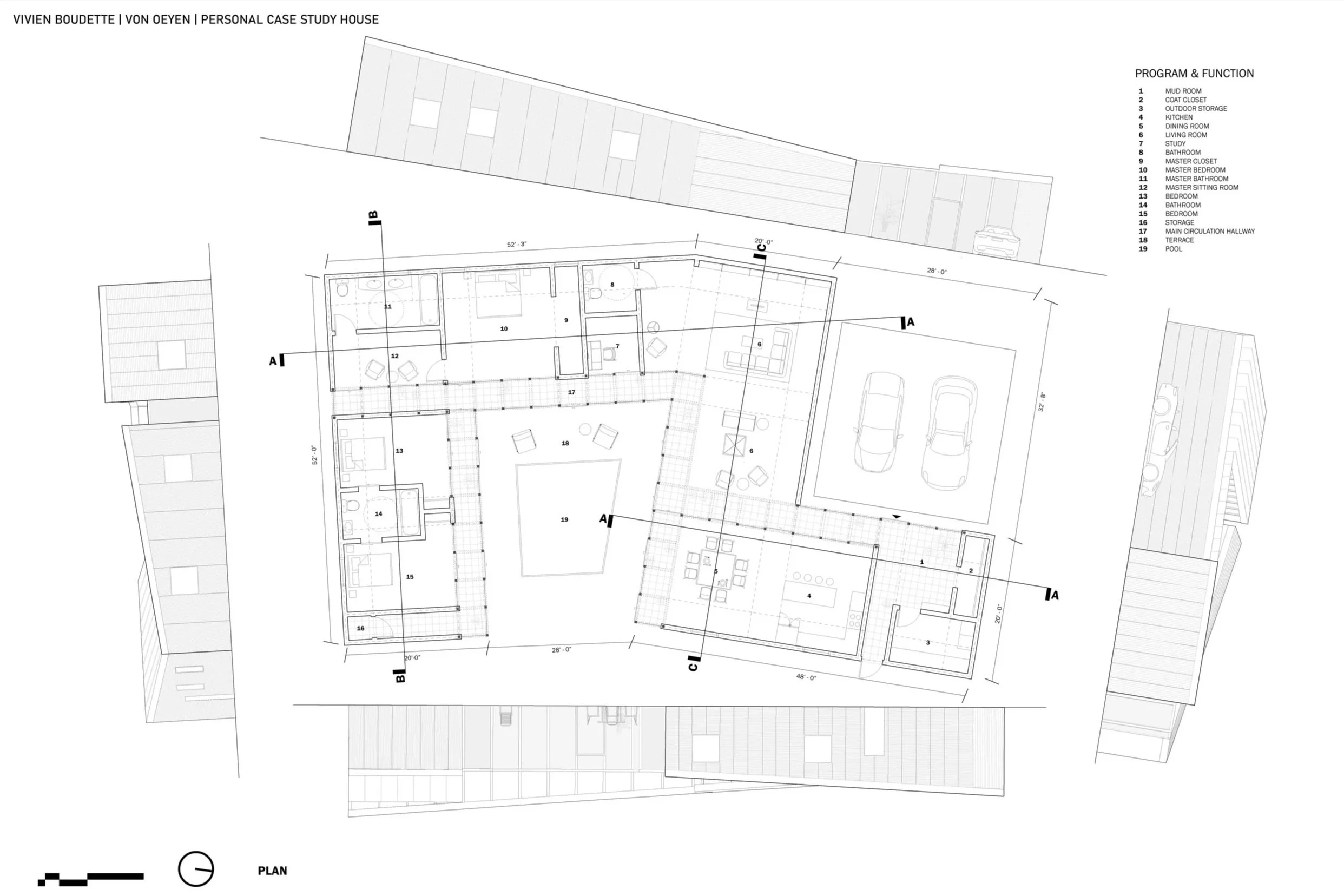
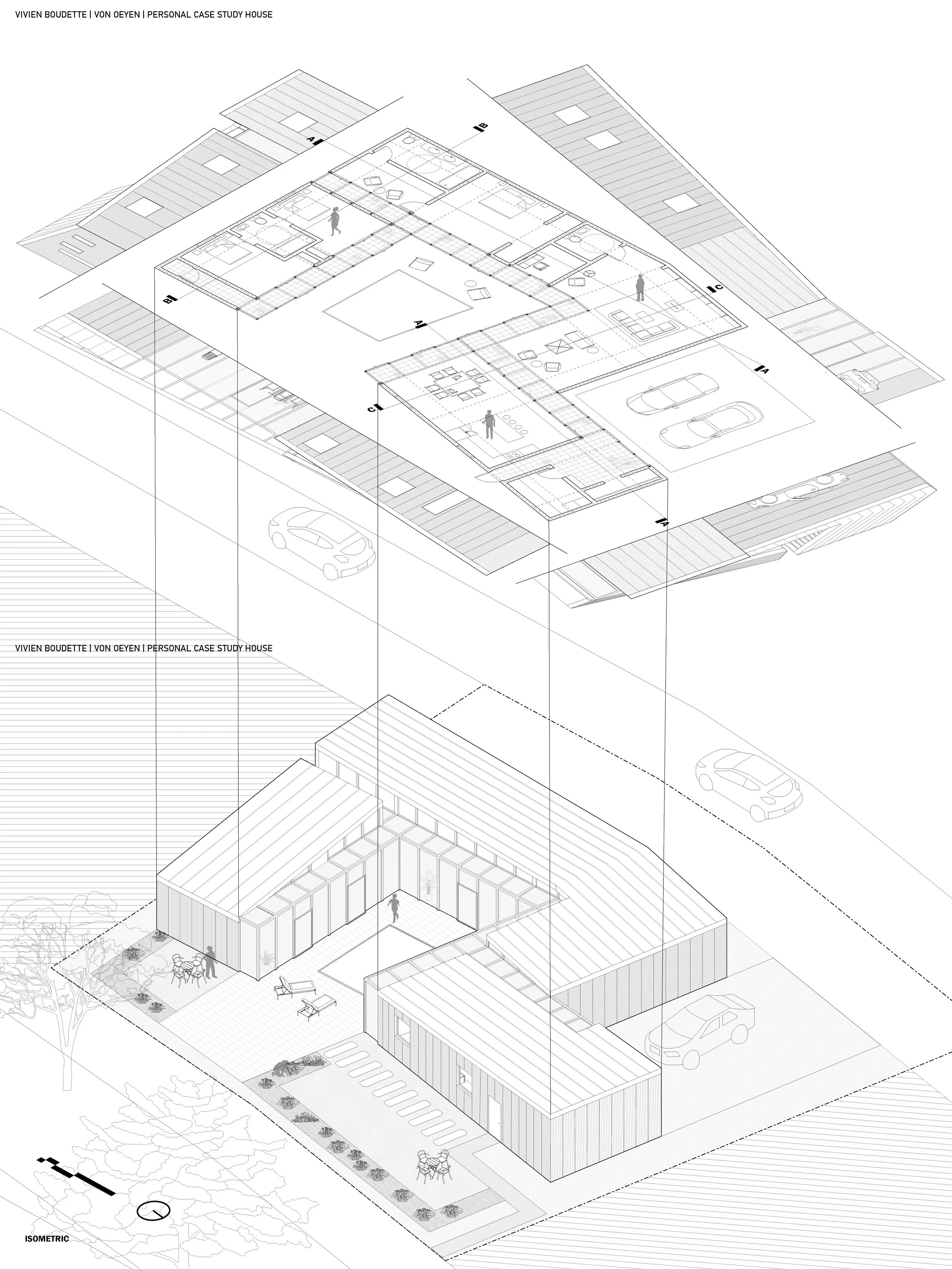
my personal approach to a Case Study house design centered around manipulated circulation through two main circulation tools: the overall sequence of program and space in the s-shaped form, and the modular block, with circulation being reserved on the 4’ outer ring around programmatic space.
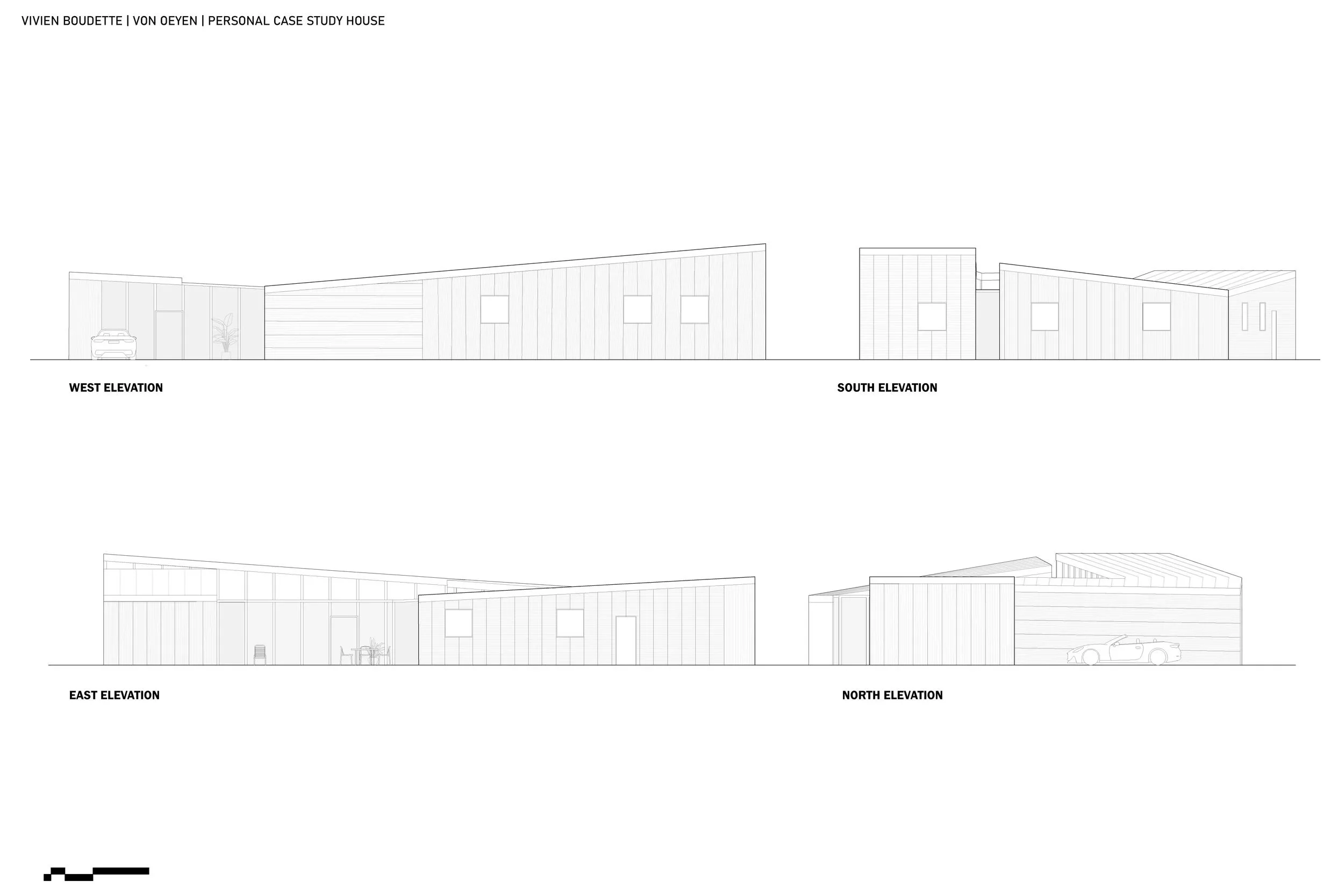
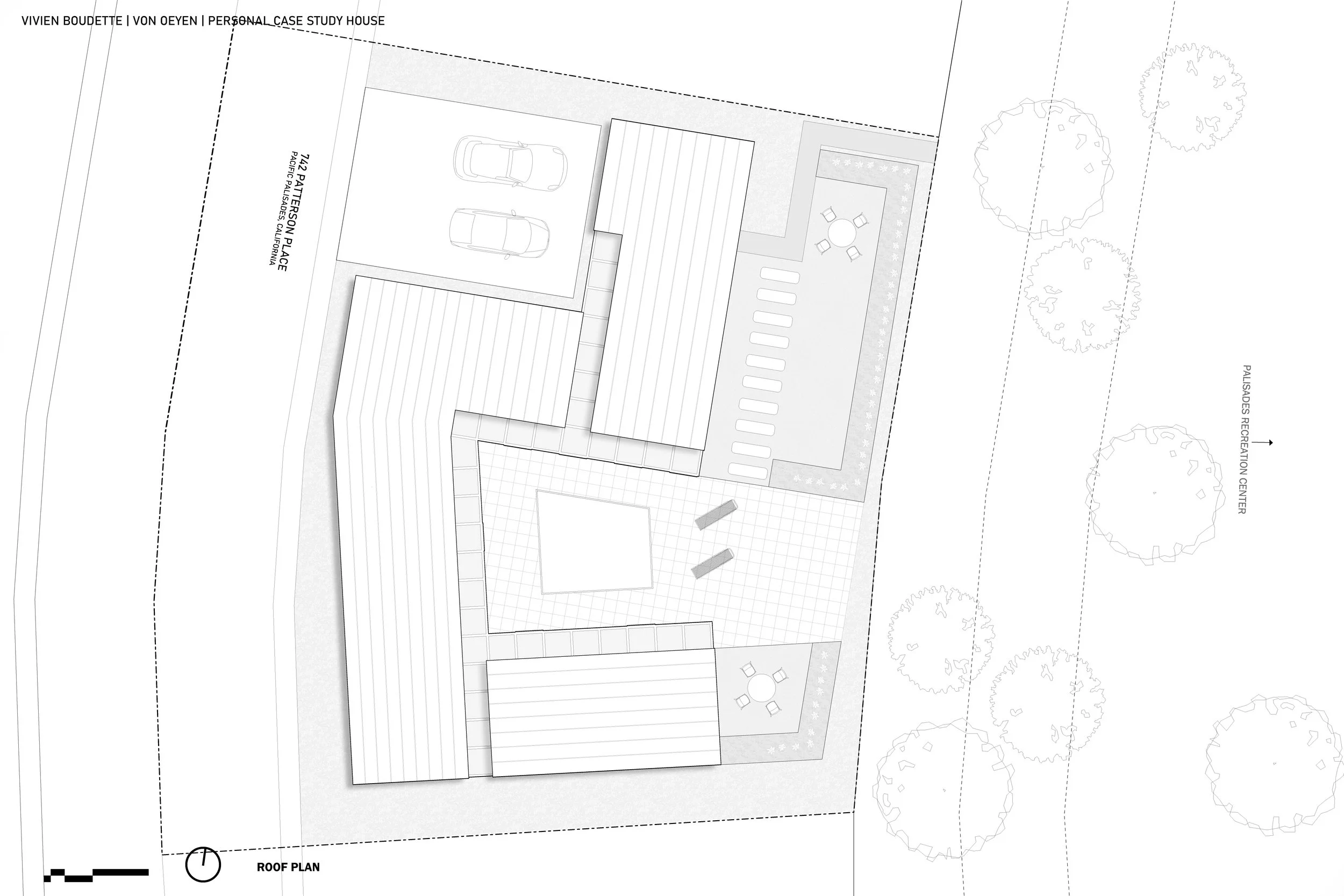
general form for the structure related to the s-shape form, in pursue of this overall circulation mentioned, but was hitched and altered to adapt and conform to the site specifically. the rotation in plan led to differentiation of private and public program. furthermore, the extension of the s-form allowed for a transformable ADU space, for a future-oriented approach.
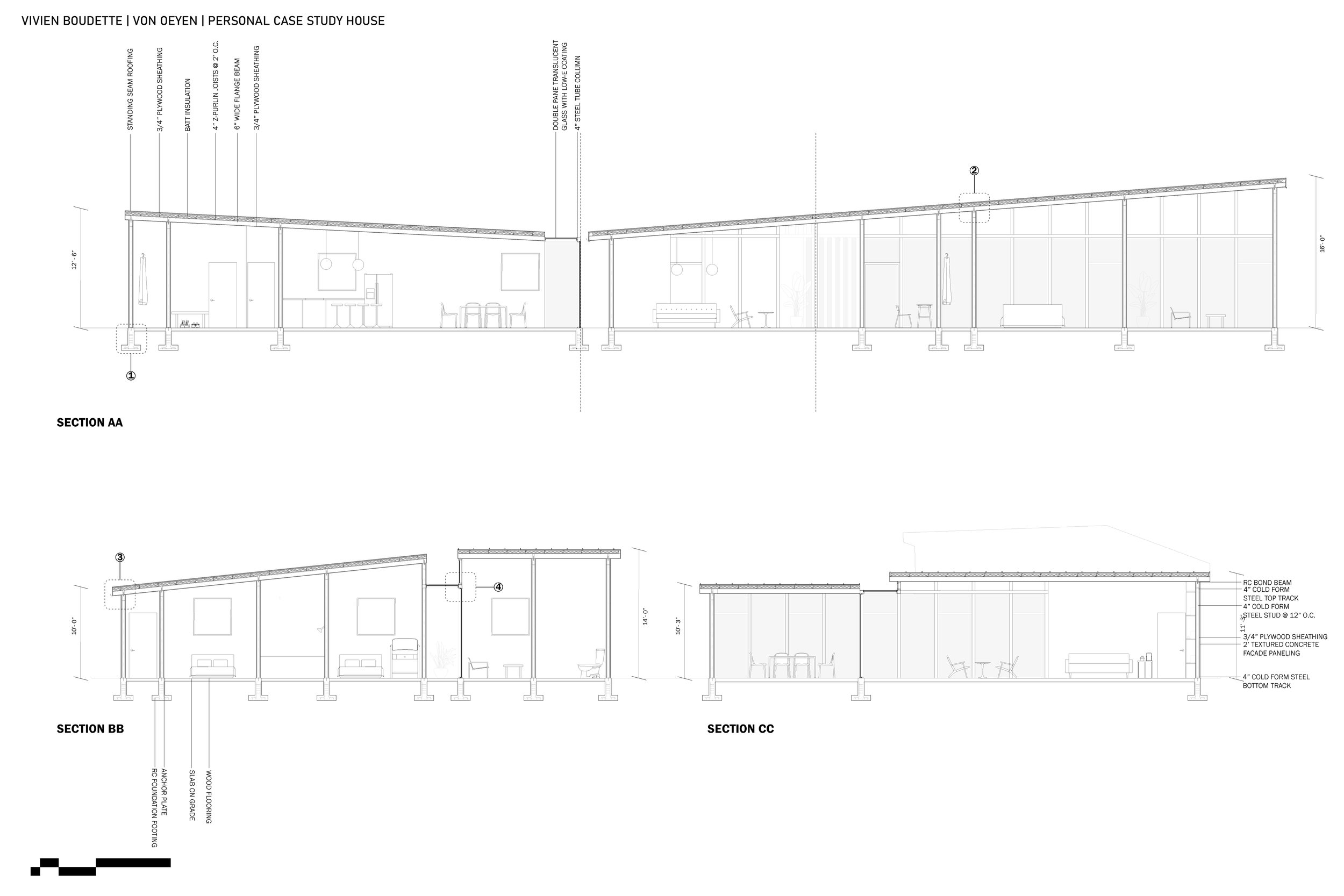
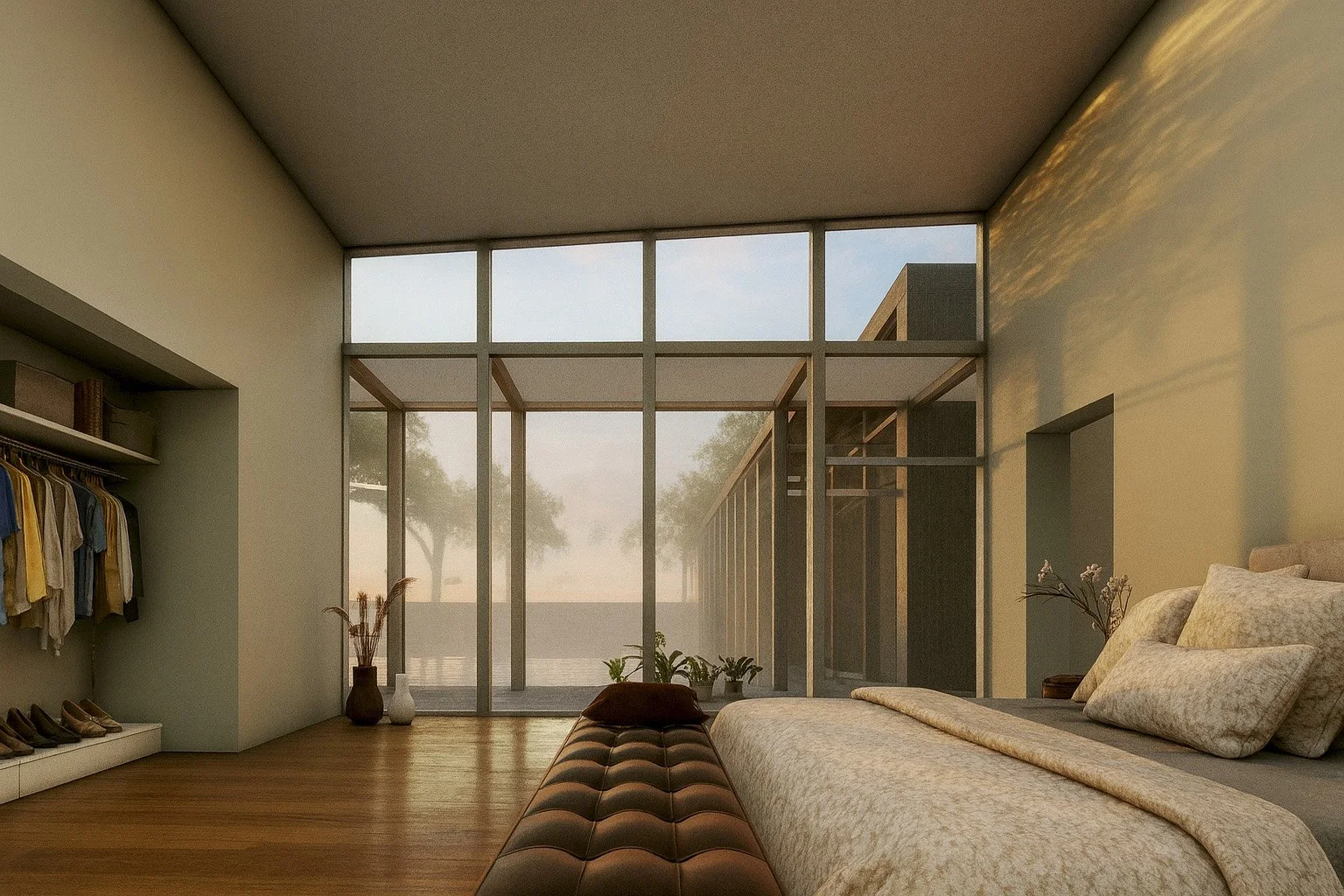
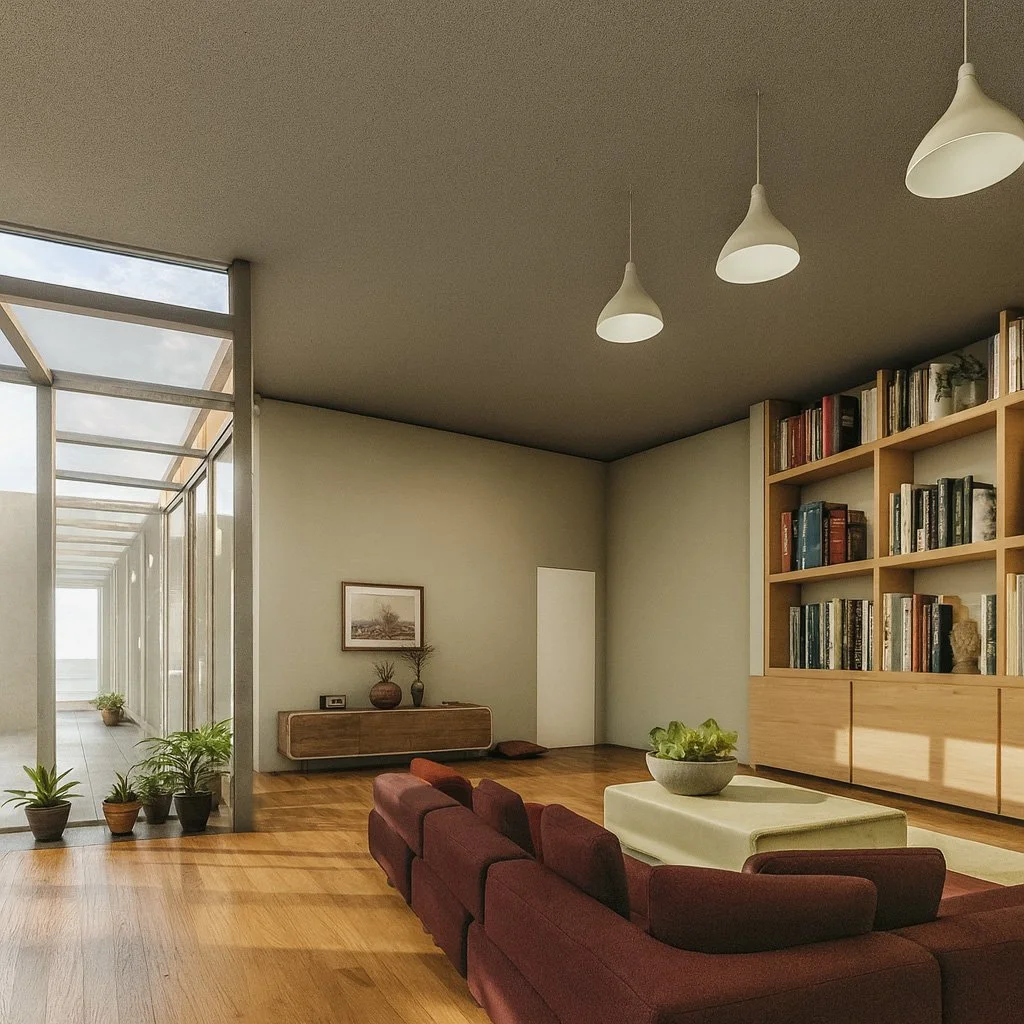
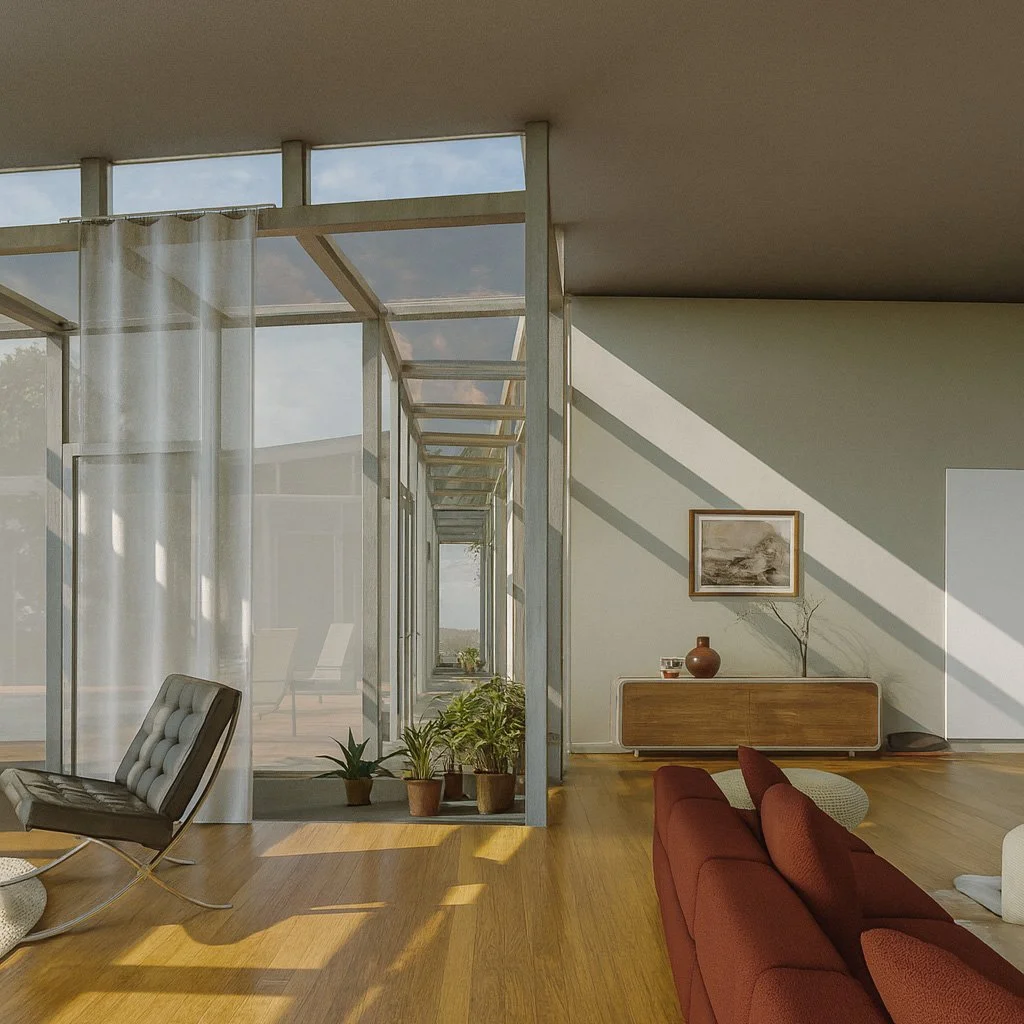
the main circulation runs along the module’s outer edges, or main artery. translucent glass encloses the hallway, diffusing light into interior spaces. this spine connects all parts of the house to the central terrace and supports interior planting to reduce exterior landscaping. air captured in the hallway rises into the sloped roofs and vents through clerestories, reducing heat gain. the main artery helps illuminate spaces and act as the primary means of movement within the interior and to the exterior.
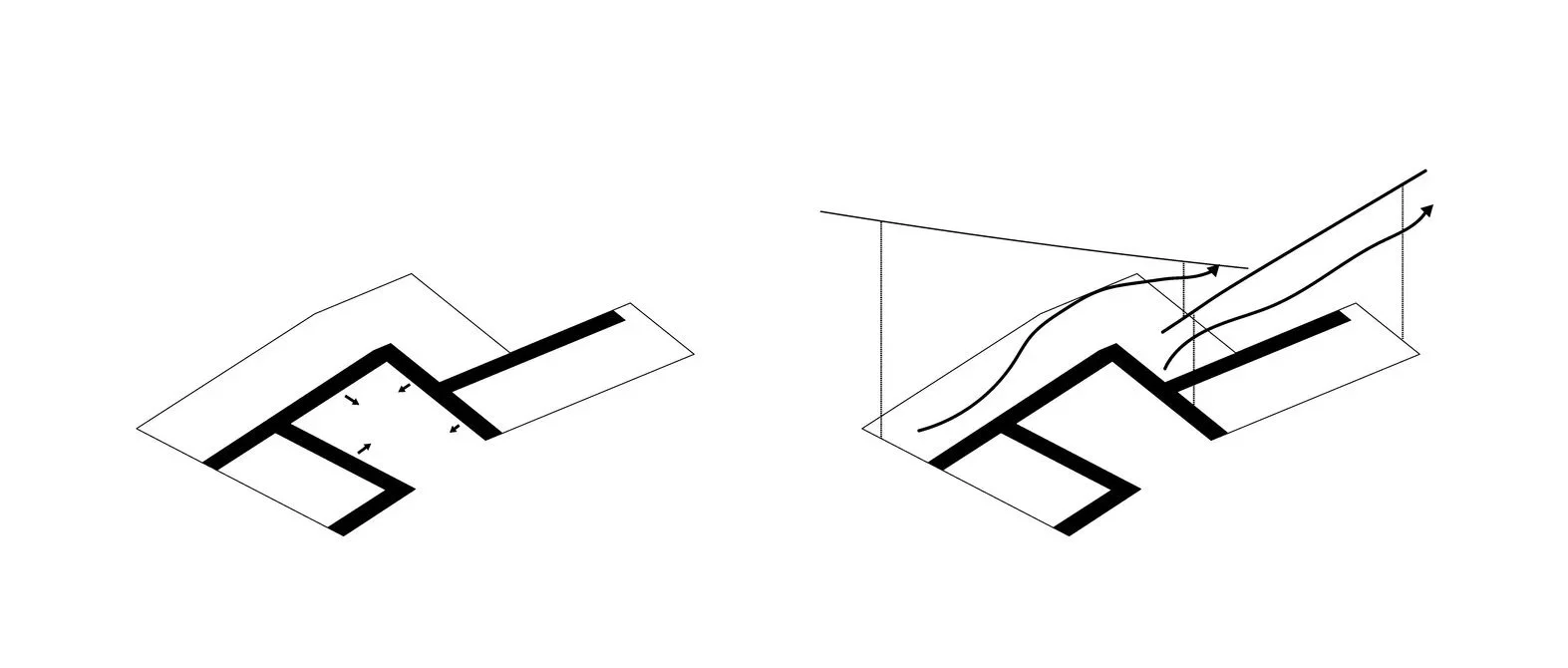
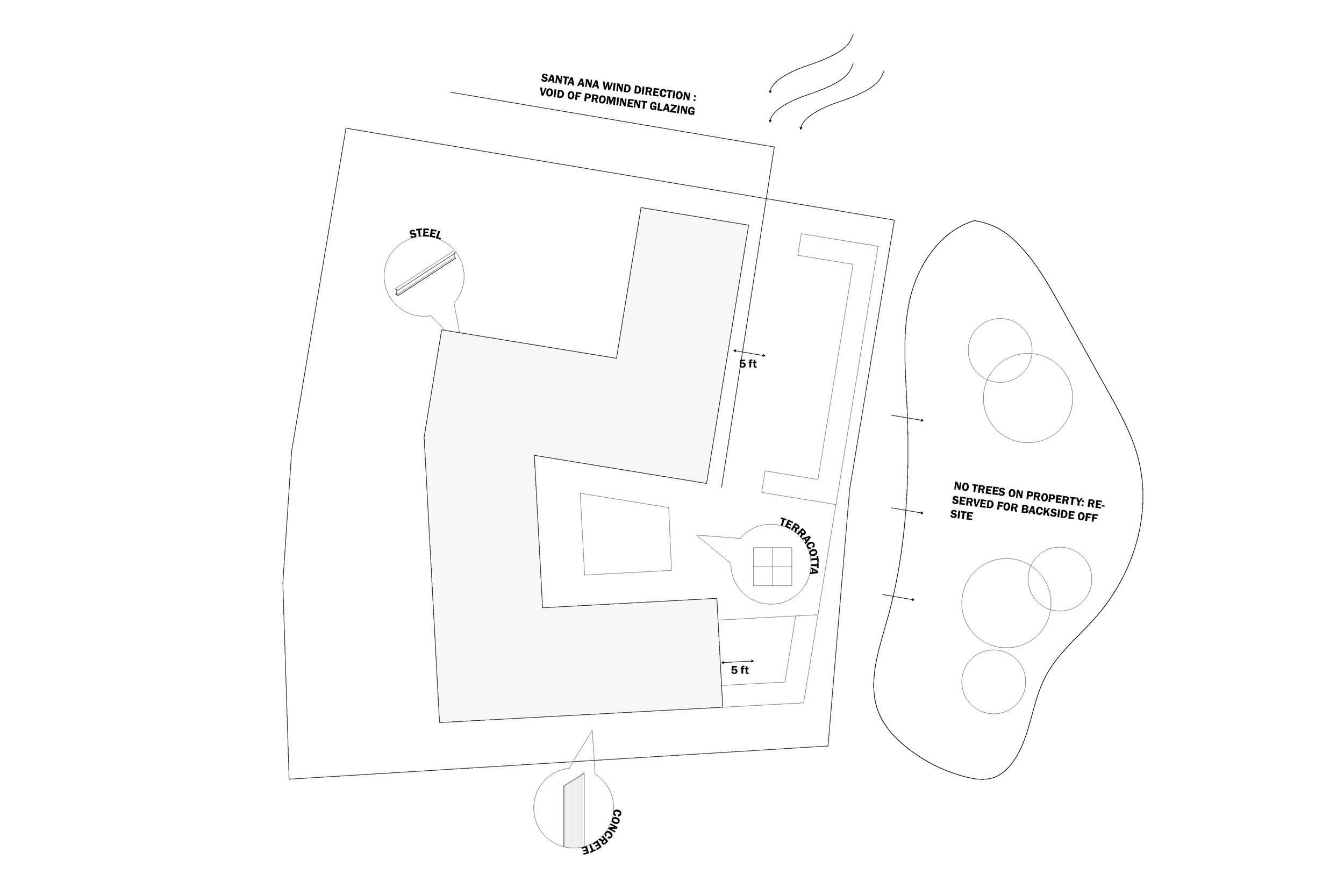
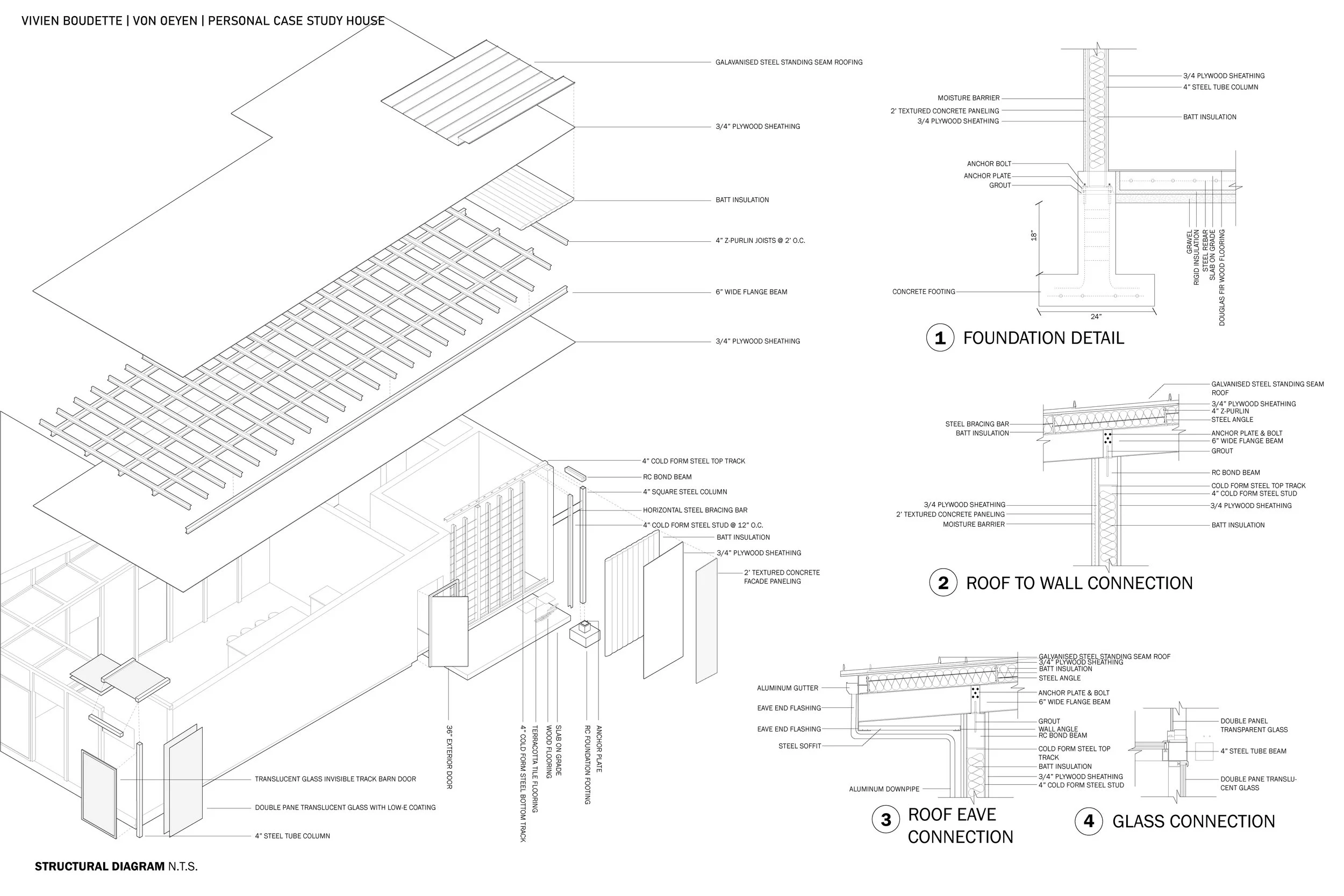
on track with the Case Study: Adapt mission to develop fire resiliency in revival of the program, my personal CSH sited in the Pacific Palisades, took on several approaches to combat the threat of wildfire in the region, to be adaptable and lasting in longevity. this included, restricting openings on the sides prone to the Santa Ana winds, using non-combustible materials, keeping trees off property boundaries, and conforming too IBHS planting distances.